Translating audit findings into accessible content standards
In preparation for the 2025 EU accessibility directive, the website and mobile app underwent an external accessibility audit.
As part of this initiative, I:
- led the content design response, working closely with POs, designers and developers
- defined standards for accessible content for my area, which were then used across other areas of the team
- updated a11y labels to reach a consistent standard and embedded accessibility thinking into our workflows
The challenge
An external accessibility audit of our website and app found that it was lacking in many areas. From a content design side, I focused on:
- Missing ARIA and accessibility labels on components
- Terminology inconsistencies across journeys
- Lack of centralized accessibility writing standards
Apart from the compliance risk, there was a deeper systematic issue where accessibility content decisions were fragmented, undocumented, and reactive rather than thought through. We needed to create a solid content accessibility base with clear guidance on how to implement WCAG standards throughout the design process.
My role
I led the content design stream of the accessibility initiative for my area of the website and app.
- Owned the remediation of accessibility-related copy issues identified in the audit
- Conducted a review of live a11y labels across web and app
- Standardised terminology across shared components
- Created accessibility writing guidelines for content contributors
- Defined component-level a11y labeling standards
- Acted as the primary point of contact for accessibility-related content queries
- Partnered with designers and developers to ensure correct implementation
Throughout the process, I deepened my expertise in WCAG guidelines, becoming the internal accessibility reference within the content design team and for numerous design and developer colleagues.
The process
Audit review and action points
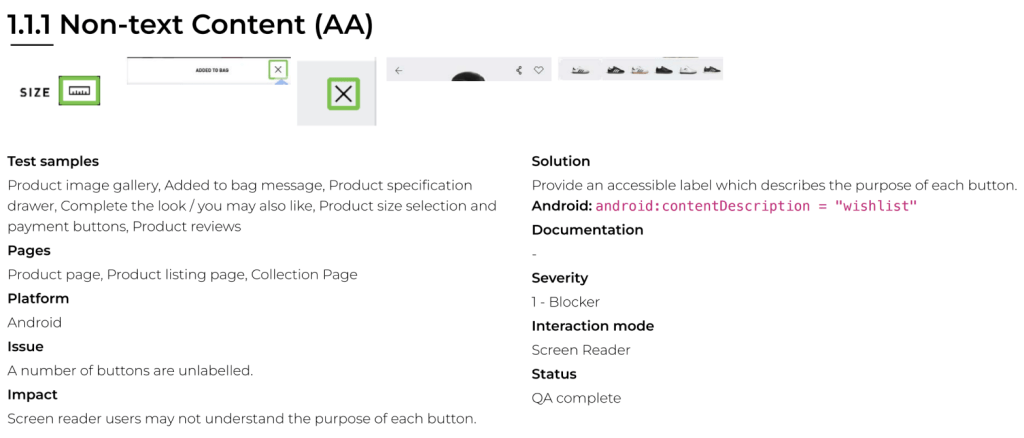
I worked closely with POs, developers, and designers to analyse the external accessibility audit. We prioritised the different issues found based on their severity, user impact, and compliance risk. We worked from most severe to least, ensuring we tackled the most outstanding issues first.
A11y label review and standardisation
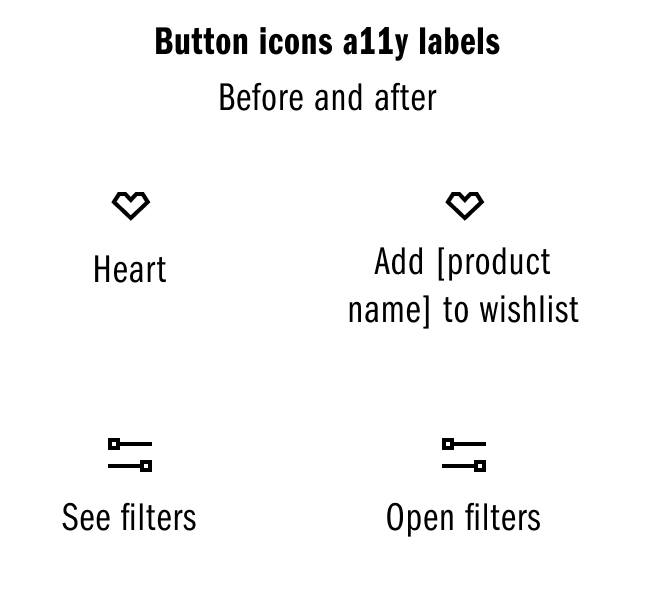
We found many labels were either missing or unhelpful to the user. I carried out a review and ensured labels were standardised across the website and app to ensure a seamless journey for our screen reader users.
I documented how to write for a11y labels to ensure there was functional clarity, consistent terminology, and alignment between visible and assistive copy.
This helped reduce the friction for assistive technology users navigating between components and created a logical progression across user journeys.
Content accessibility guidelines
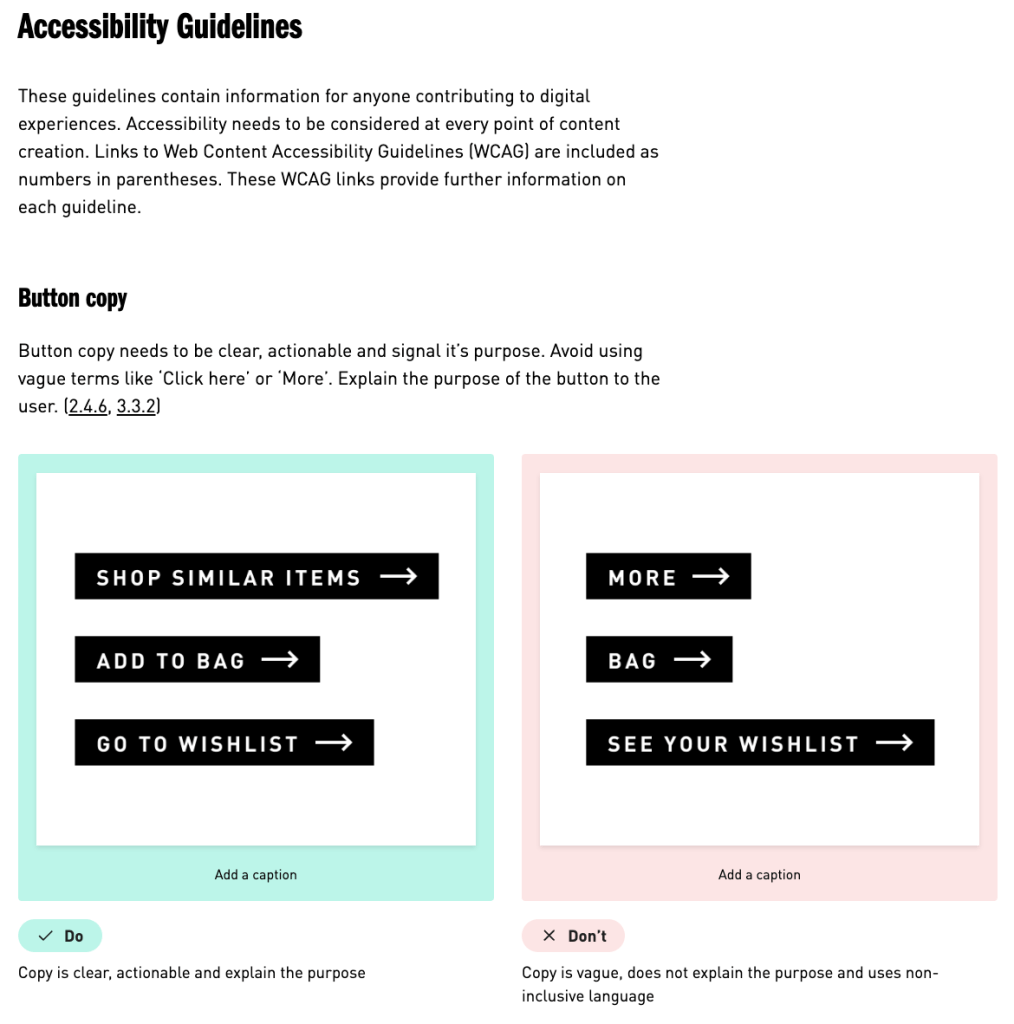
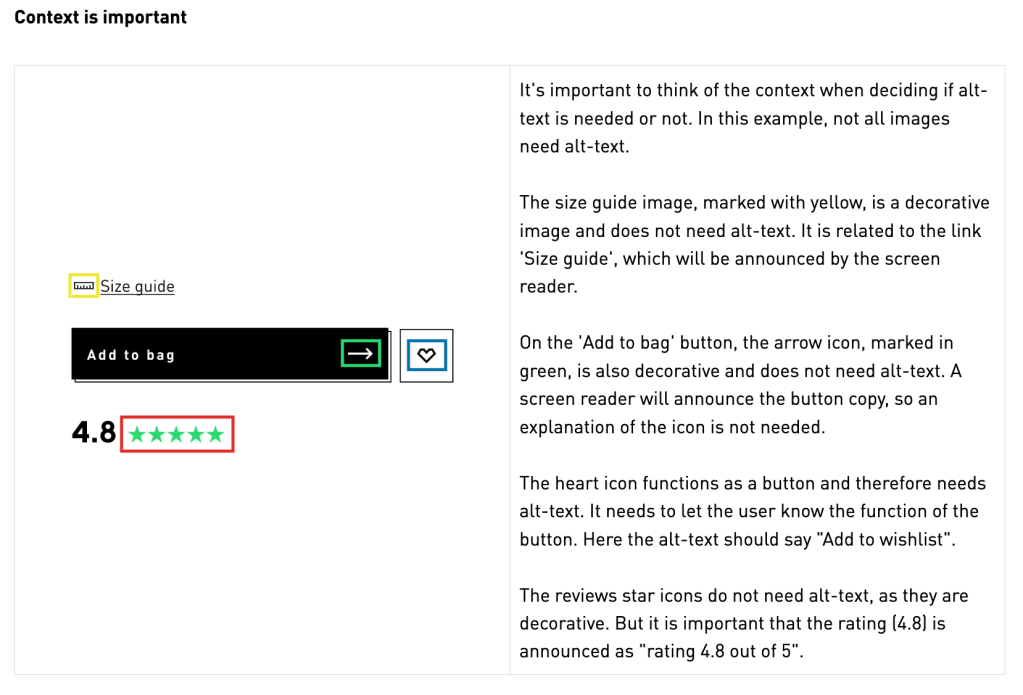
I created guidelines to prevent future inconsistencies. Accessibility content guidelines were aligned with and linked to WCAG guidelines, so it was clear why and how we implemented them. I added accessibility guidelines to our already existing component guidelines, again linking to WCAG and explaining how to implement. I also created examples and rules for anyone writing, be it in UX or in a more creative way, to guarantee compliance in all areas of writing.
Cross-functional enablement
This process needed to be a major team effort, involving stakeholders from across the digital platform. I worked closely with designers to understand how we could implement an accessibility checklist in Figma to help them access information on accessibility as they designed. I aligned with POs to understand timelines for all these fixes and guaranteed on time delivery. I collaborated with developers to explain how consistent copy is important for assistive technology, while they showed me how to use and test what we were creating. I worked closely with the localization team to ensure they understood why we were creating these labels and felt confident localizing these labels to their language.
We all collaborated together to make changes to existing components that were unusable to assistive technology users. One of our biggest achievements was designing, testing, and implementing a new forms field that passed WCAG guidelines, where the previous one had failed.
The impact
- Resolved major a11y copy issues highlighted by the external audit
- Reduced inconsistencies across the web and app journeys, in every language
- Standardised a11y labels across core components
- Established accessibility content standards
- Increased the teams overall confidence and literacy around WCAG guidelines
Through this initiative we brought accessibility into our day to day and it became a part of our design process, rather than something we needed for compliancy. At the beginning, there was a lot of push back related to how helpful this really was. The compliance side helped many people get on board quicker, but once we had clear guidelines and information in place to educate, it became a part of the process for everyone.
 Caitríona Ross